Quick answer: clicking when turning usually means a worn CV joint. Whining when turning often means low power steering fluid. Squealing when braking is normally the brake wear indicator, and grinding means the pads are worn down to metal. A humming or roaring that gets louder with speed often points to a worn wheel bearing.
Key Takeaways
- Grinding brakes are a safety issue. Get them inspected right away.
- Note when the noise happens (turning, braking, accelerating, over bumps) and which side it comes from.
- Recording the sound on your phone helps a mechanic diagnose it faster.
Noises When Turning
| Sound | Likely cause |
|---|---|
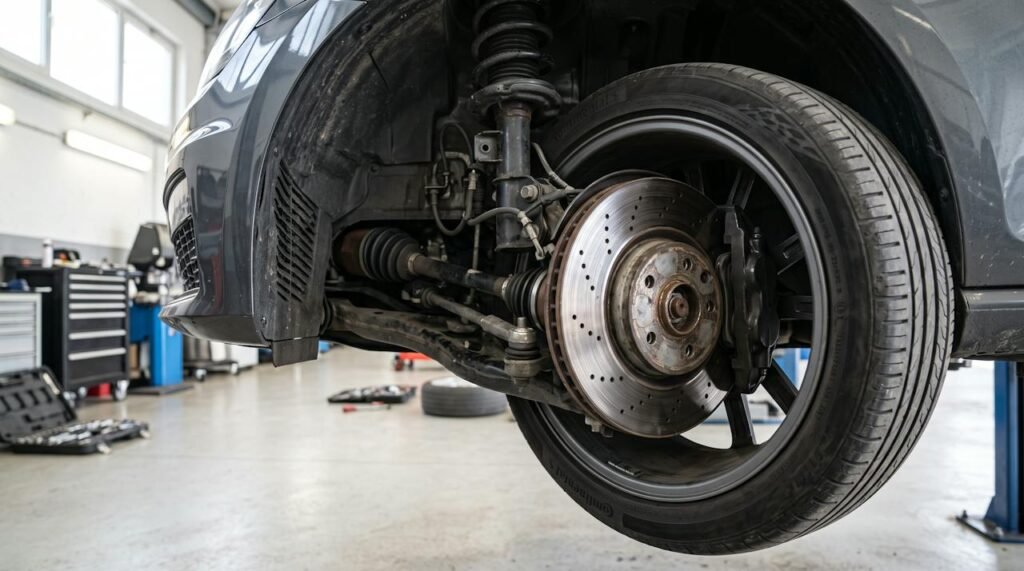
| Clicking or popping, especially on tight turns | Worn outer CV joint (check for a torn rubber boot) |
| Whining or groaning | Low power steering fluid or a failing power steering pump |
| Creaking or clunking | Worn ball joints, tie rod ends, strut mounts or sway bar links |
| Rubbing or scraping | Tire rubbing on the wheel well or a loose splash guard |
| Humming that changes when you turn | Worn wheel bearing |
Noises When Braking
| Sound | Likely cause |
|---|---|
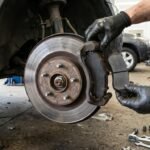
| High-pitched squeal | Brake pad wear indicator, glazed pads, or dust and moisture |
| Grinding | Pads worn to the backing plate, metal on metal (stop and get it checked) |
| Clunk when you first brake | Loose caliper or worn suspension parts |
| Pulsing or juddering in the pedal | Uneven or warped brake rotors |
A light squeal on the first few stops on a damp morning is often just surface rust and is normal. A squeal that persists, or any grinding, means the brakes need inspecting. See our guide on when to replace your brake pads.
Noises When Accelerating
| Sound | Likely cause |
|---|---|
| Whining that rises with engine speed | Worn drive belt or pulley, low transmission fluid, failing alternator |
| Rattling from underneath | Loose exhaust heat shield |
| Knocking or pinging | Wrong fuel octane, carbon buildup or ignition timing problems |
| Roaring that rises with road speed | Worn wheel bearing or exhaust leak |
| Clunk when pulling away | Worn engine or transmission mounts, CV joint |
Noises at Idle
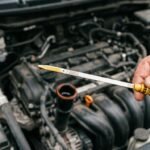
A squeal when the engine starts or the A/C switches on is usually a slipping drive belt. A ticking that speeds up with engine speed can be low oil or noisy valve lifters. Check the oil level first: our guide to checking car fluids shows how.
Frequently Asked Questions
Is a clicking noise when turning dangerous?
A clicking CV joint usually gives plenty of warning, but it will get worse and can eventually fail. Have it replaced soon rather than waiting.
Why does my car make noise when I turn the steering wheel while parked?
A groan or whine at low speed is often low power steering fluid or a worn pump. Many newer cars have electric power steering, where a faint motor whir is normal.
Why do my brakes squeak after rain?
Moisture forms a light layer of rust on the rotors, which the pads scrape off in the first few stops. If the noise disappears quickly, it is normal.