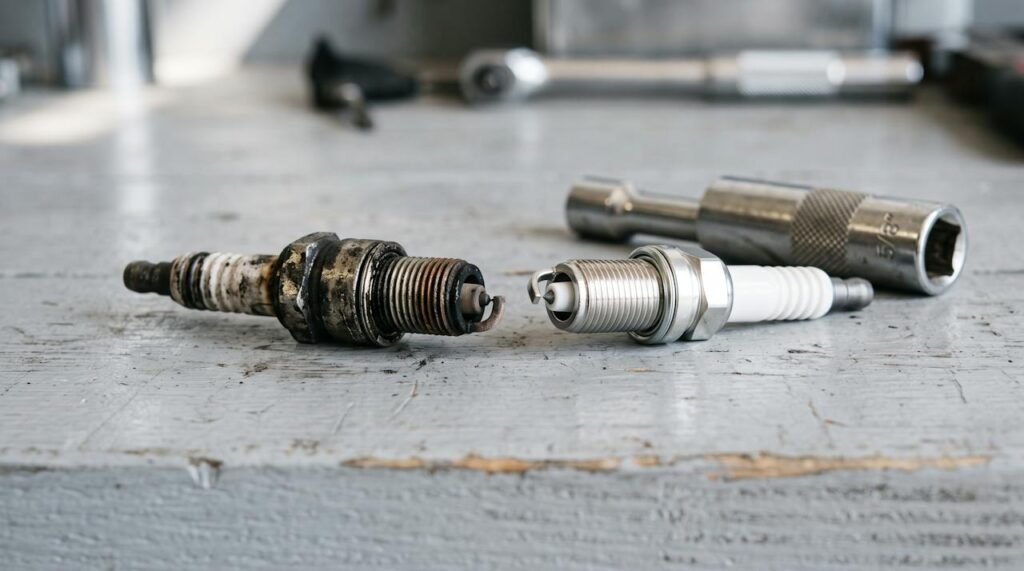
Quick answer: it depends on the plug type. Traditional copper spark plugs usually need replacing about every 30,000 miles. Platinum and iridium plugs, which most modern cars use, often last 60,000 to 100,000 miles. Your owner’s manual gives the exact interval for your engine.
Typical Spark Plug Lifespan
| Plug type | Typical interval |
|---|---|
| Copper | About 20,000–30,000 miles |
| Single platinum | About 60,000 miles |
| Double platinum / iridium | About 60,000–100,000+ miles |
Signs Your Spark Plugs Need Replacing
- Rough or shaky idle
- Engine misfires or hesitation when accelerating
- Harder starting, especially when cold
- Worse fuel economy
- Check engine light, often with a misfire code
Misfires can make the whole car vibrate. Read more about why your car might be shaking.
Why It Matters
Worn plugs need more voltage to fire, which strains the ignition coils, and they burn fuel less efficiently. Persistent misfires can also damage the catalytic converter, which is far more expensive than a set of plugs.
Can You Change Spark Plugs Yourself?
On many four-cylinder engines it is a straightforward DIY job with a spark plug socket and a torque wrench. On some V6 and V8 engines, the rear plugs are hard to reach, so a garage is easier. Always use the plug type and gap your manual specifies, and tighten to the correct torque.
Frequently Asked Questions
What happens if you never change your spark plugs?
Performance and fuel economy gradually drop, and eventually the engine misfires. Very old plugs can also seize in the cylinder head and become hard to remove.
Should I replace ignition coils with spark plugs?
Not automatically. Replace coils only if one is faulty, but inspect them and their boots while the plugs are out.
Do spark plugs affect fuel economy?
Yes. Worn plugs burn fuel less completely, so replacing them on time helps keep fuel economy where it should be.