Quick answer: the moment your car shakes is the best clue to the cause. Shaking at highway speed is usually unbalanced or damaged wheels and tires. Shaking when braking points to warped or unevenly worn brake rotors. Shaking at idle is often an engine misfire or worn engine mounts. Shaking when accelerating can mean a worn CV axle or engine mount.
Key Takeaways
- Note exactly when the shaking happens (speed, braking, idling, accelerating). It narrows the cause down quickly.
- A flashing check engine light with shaking means the engine is misfiring. Reduce speed and get it checked right away.
- Sudden, violent shaking can mean a loose wheel or a failing tire. Pull over safely and inspect before driving on.
Quick Diagnosis Table
| When it shakes | Most likely causes |
|---|---|
| At 50–70 mph, through the steering wheel | Wheel balance, bent wheel, tire damage |
| When braking | Warped or unevenly worn brake rotors, sticking caliper |
| At idle or stopped in gear | Engine misfire, worn engine mounts, dirty throttle body |
| When accelerating | Worn CV axle (inner joint), engine or transmission mounts, misfire |
| When turning | Worn CV joints, wheel bearings, suspension parts |
| At all speeds, getting worse | Loose lug nuts, separating tire, worn suspension or steering parts |
1. Unbalanced or Damaged Wheels and Tires
The most common cause of a steering wheel that vibrates at highway speed. Wheels lose their balance weights over time, and potholes can bend a rim or damage a tire. A tire shop can rebalance the wheels quickly and cheaply. Also check for bulges in the sidewalls or uneven wear, which can cause vibration too.
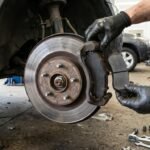
2. Warped or Unevenly Worn Brake Rotors
If the steering wheel or brake pedal pulses when you slow down, the rotors are probably uneven. The usual fix is resurfacing or replacing the rotors, normally together with new pads. See our guide on when to replace your brake pads.
3. Sticking Brake Caliper
A caliper that does not release keeps one brake slightly applied. You may notice a burning smell, the car pulling to one side, or one wheel much hotter than the others after a drive. Have it repaired promptly: it wears out pads and rotors and can overheat the brakes.
4. Engine Misfire
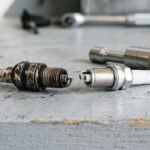
Worn spark plugs, a failing ignition coil, or a fuel or vacuum problem can make one cylinder misfire. The car shakes most at idle and under load, and the check engine light usually comes on. A diagnostic scan will show which cylinder is misfiring.
5. Worn Engine or Transmission Mounts
Mounts are rubber blocks that absorb engine vibration. When they wear out, you feel more vibration at idle (especially in Drive), and you may hear a clunk when you shift or accelerate.
6. Worn CV Axle
A worn inner CV joint often causes vibration when accelerating. A worn outer joint usually clicks when you turn. A torn rubber boot lets grease out and dirt in, so check the boots for grease spray around the inside of the wheel.
7. Suspension and Steering Wear
Worn tie rod ends, ball joints, wheel bearings or shocks can cause shaking, wandering and uneven tire wear. These are safety-critical parts, so have them inspected if the shaking comes with clunks or loose steering.
8. Loose Lug Nuts
If a wheel was recently removed and the car suddenly starts shaking or wobbling, stop and check the lug nuts. A loose wheel can come off. Tighten the nuts to the specified torque or have the car towed to a garage.
Frequently Asked Questions
Is it safe to drive a car that is shaking?
Mild vibration at a particular speed (usually wheel balance) is not an emergency, but get it checked soon. Sudden or violent shaking, shaking with a flashing check engine light, or shaking after a wheel change is not safe: stop and investigate.
Why does my car shake at 60 mph but not at lower speeds?
Wheel imbalance shows up in a specific speed range, often around 50 to 70 mph. Rebalancing the wheels usually fixes it.
How much does it cost to fix a shaking car?
It depends on the cause. Wheel balancing is one of the cheapest fixes, while rotors, CV axles and engine mounts cost more. A garage can usually pin down the cause with a short test drive and an inspection.