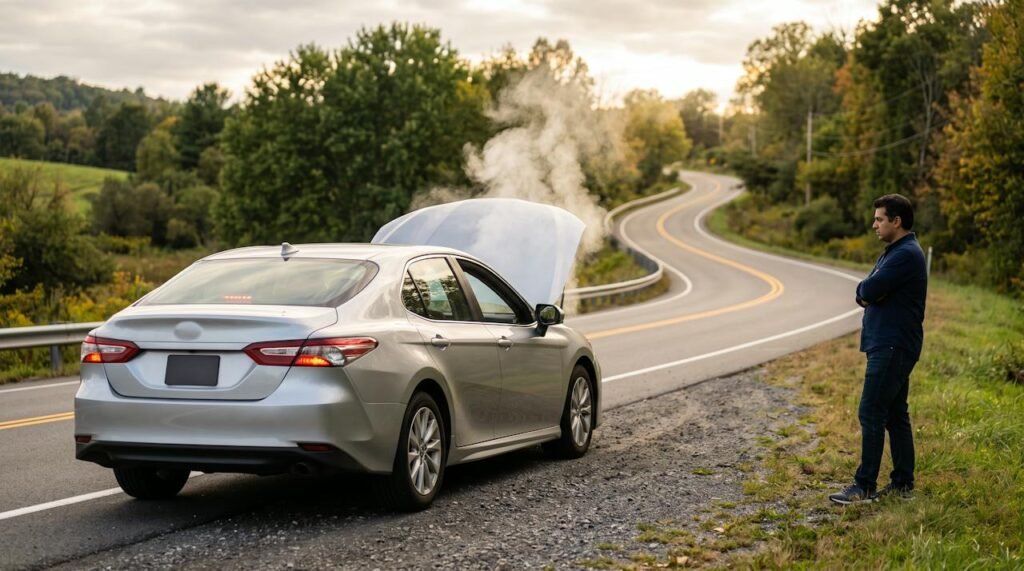
Quick answer: a car usually overheats because the cooling system cannot remove heat fast enough. The most common causes are low coolant from a leak, a thermostat stuck closed, a failed water pump, a radiator fan that is not working or a blocked radiator. If the gauge reaches the red, pull over and switch off the engine. Driving an overheating engine can cause very expensive damage.
What to Do Right Away
- Turn off the air conditioning to reduce the load on the engine.
- Turn the heater to full hot with the fan on maximum. This pulls heat away from the engine.
- Pull over as soon as it is safe and switch off the engine.
- Do not open the radiator or coolant reservoir cap while the engine is hot. Pressurized coolant can cause serious burns.
- Wait at least 30 minutes for the engine to cool, then check the coolant level.
- If the level is low, top up with the correct coolant (or water in an emergency) and look for leaks. If the car overheats again, have it towed.
Key Takeaways
- Low coolant is the most common cause, and it almost always means a leak somewhere.
- If the car overheats in traffic but is fine on the highway, suspect the radiator fan.
- White exhaust smoke, unexplained coolant loss or milky oil can point to a head gasket problem.
Common Causes of Overheating
Low Coolant or a Coolant Leak
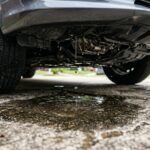
Look for puddles under the car (coolant is usually green, orange or pink and smells sweet), damp hoses, crusty residue around the radiator, or a coolant level below the MIN mark. Our guide to checking car fluids shows how to check coolant safely.
Thermostat Stuck Closed
The thermostat opens to let coolant flow to the radiator once the engine is warm. If it sticks closed, the temperature climbs quickly, often within 10 to 15 minutes of starting. It is a relatively cheap part to replace.
Failed Water Pump
The water pump circulates coolant. Signs of failure include coolant leaking from the front of the engine, a whining or grinding noise, and overheating. On some engines the pump is driven by the timing belt, so it is often replaced along with the belt.
Radiator Fan Not Working
At highway speed, air flows through the radiator naturally. In slow traffic, the fan does the work. If the car only overheats when idling or crawling, check that the fan runs when the engine is hot or the A/C is on. A failed fan motor, relay or fuse can stop it.
Blocked or Damaged Radiator
Debris, bugs and leaves on the front of the radiator, or internal blockages from old coolant, reduce cooling. Clean the fins gently and follow the recommended coolant change interval.
Broken Drive Belt
On some cars the serpentine belt drives the water pump. If it breaks, you will usually also lose power steering assistance and battery charging, and warning lights will come on.
Head Gasket Failure
A blown head gasket can push combustion gases into the cooling system or let coolant into the cylinders. Signs include white exhaust smoke with a sweet smell, coolant disappearing with no visible leak, bubbles in the coolant reservoir and milky oil. It is a serious repair, and it is often caused by driving while overheated.
Frequently Asked Questions
Can I drive my car if it is overheating?
No. Driving with the gauge in the red can warp the cylinder head and blow the head gasket. Stop, let it cool and find the cause.
Can I just add water to the radiator?
In an emergency, yes, once the engine has cooled. But water does not protect against freezing or corrosion, so refill with the correct coolant mix as soon as possible.
Why does my car overheat when the A/C is on?
The A/C adds load to the engine and heat in front of the radiator. If the cooling system is already weak, for example because of a slow fan or low coolant, using the A/C can tip it over the edge.