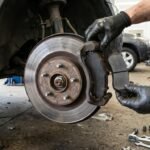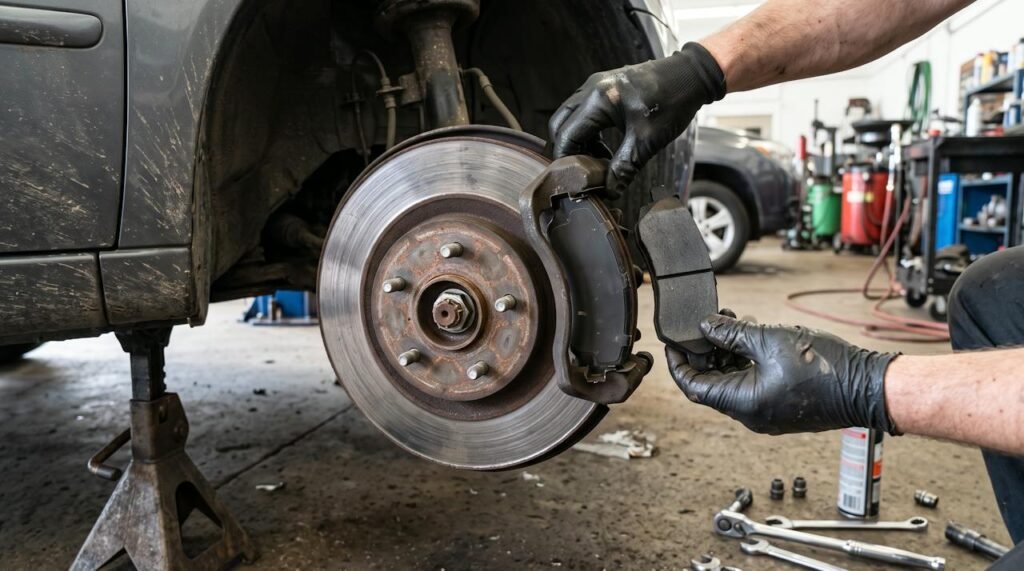
Quick answer: brake pads typically last between 30,000 and 70,000 miles. There is no fixed interval, because wear depends on your driving, your car and the pad material. Heavy city driving wears pads much faster than highway driving. Many mechanics recommend replacing pads at about 3 to 4 mm of remaining friction material.
What Affects Brake Pad Life
- Driving style: late, hard braking wears pads fastest.
- Where you drive: stop-and-go traffic and hills wear pads faster than highways.
- Vehicle weight: heavier cars, SUVs and towing increase wear.
- Pad material: ceramic pads usually last longer than organic pads.
- Front vs. rear: front pads usually wear faster because they do most of the braking.
Pad Thickness Guide
| Remaining pad thickness | What to do |
|---|---|
| 8–12 mm | New or nearly new |
| About 4–6 mm | Fine, keep checking at each service |
| About 3 mm | Plan to replace soon |
| Below 3 mm | Replace now |
Warning Signs
- A high-pitched squeal from the wear indicator
- Grinding, which means metal-on-metal contact
- A brake pad warning light on the dashboard
- Longer stopping distances or a soft pedal
- The car pulling to one side when braking
For a deeper look at the warning signs, read our guide on when to replace your brake pads.
Do You Need New Rotors Too?
Not always. Rotors are often replaced or resurfaced with the pads if they are worn below their minimum thickness, scored or uneven. A shaking steering wheel when braking is a common sign of rotor problems.
Frequently Asked Questions
How often should brake pads be checked?
Have them checked at every tire rotation or oil change. Many wheels let you see the outer pad through the spokes.
Should all four brake pads be replaced at once?
Pads are replaced in pairs on the same axle (both fronts or both rears). The front and rear do not always need doing at the same time.
How long does it take to replace brake pads?
For a garage, usually around an hour per axle, a little longer if the rotors are replaced too.